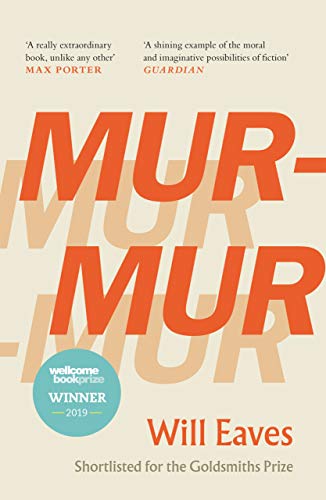

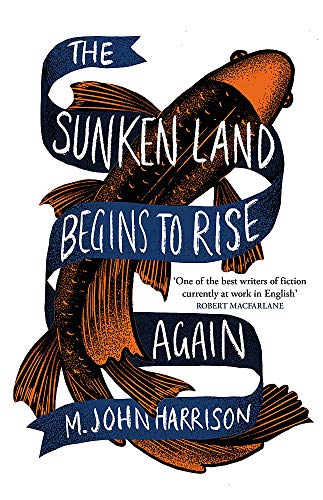
The uncertainties of Brexit-era Britain are matched by the desultory on-and-off relationship between Shaw and Victoria, anchoring the fluidity of the here-and-now with a geological-age perspective. If the landscape of the UK could so easily have evolved another way, could humanity have taken a mutant route that has remained hidden … until now? Reads like Charles Kingsley for Gen Z. Do you rub your chin or chuckle over the wry social insights?
Blurry, estuarine-seeming streets in the centre of nineteenth-century Leeds; a version of Hampstead set on vague bluffs above shallow water; ambiguous figures observed on a vast, sloping, otherwise deserted quay. Sea change, taking place in damp air, foul weather, at a distance, at night. Everything liquidised. Where it wasn't the moon shining on water, everything looked like the moon shining on water: it was hard to see what the artist had been thinking. Bathed in the transformational odours of care-facility cooking and floor polish, the traffic rolling in on the A316 like surf or tinnitus behind him, Shaw sat captivated until visiting hours were over and he was asked to leave. If all change is sea change, he thought on the train back to Mortlake, the he could describe his own crisis - whatever it had been - as distributed rather than catastrophic. Sea change precludes the single cause, is neither convulsive nor properly conclusive: perhaps, like anyone five fathoms down into their life, he had simply experienced a series of adjustments, of overgrowths and dissolvings - processes so slow they might still be going on, so that the things happening to him now were not so much an aftermath as the expanding edge of the disaster itself, lapping at recently unrecognisable coasts.